UX for DHC-Monash
Delivered presentation and report assets in time for a critical ARPA-H milestone, helping align stakeholders around a complex dual-user CT workflow.
UX Design & Visual Communication with DHC - Monash
I was recently invited by 'Dr Nyein Chan Aung' to assist the team at 'Design Health Collab - Monash' in distilling a body of research into an engaging and informative presentation and report for the United States Government’s - 'ARPA-H Platform Accelerating Rural Access to Distributed & InteGrated Medical care (PARADIGM) program.'

Dr Aung is 1 year into a 5 year project that looks set to revolutionise radiology. He and his team are working on mobile CT scanners for rural communities in the United States, who may have poor access to medical equipment.
The research partnership is made up of Dr Aung’s Monash team, Australian tech company 'Micro-X', which has figured out ways to make CT scanners much, much smaller, and 'Johns Hopkins University' in the US.
The $A25 million contract from US Advanced Research Projects Agency for Health (ARPA-H) has seen the partnership begin developing prototypes as part of their PARADIGM initiative.
My Role
When I joined - the team at DHC-Monash had explored and developed a comprehensive body of insights into the proposed CT Scan workflow, with a breadth of enquiry and recommendation to ensure the human experience be considered and curated while held in balance with best practice requirements, physical and geographic constraints and quality outcomes.
My task was to create a visual storyline that held the audience's orientation in time, space (location of services and internal configuration of vehicle) and the workflow process (start to finish), while simultaneously highlighting and demonstrating supporting considerations, research and recommendations.
Approach
Once I had familiarised myself with DHC’s research findings, their identified CT Workflow and recommendation specifics, I suggested that we split the single presentation into a digital (talk to) slide presentation, with a supporting (more exhaustive) report document.
This approach enabled a cohesive storytelling arc necessary to bring the diverse audience up to speed with the workflow study and proposal, while providing the depth of research justifying its resulting design recommendations.
Delivery
We were on a tight timeline, and it was a unique and hearty challenge to absorb, understand and then communicate this dual-user workflow with such interesting, practical and technical constraints and outcomes.
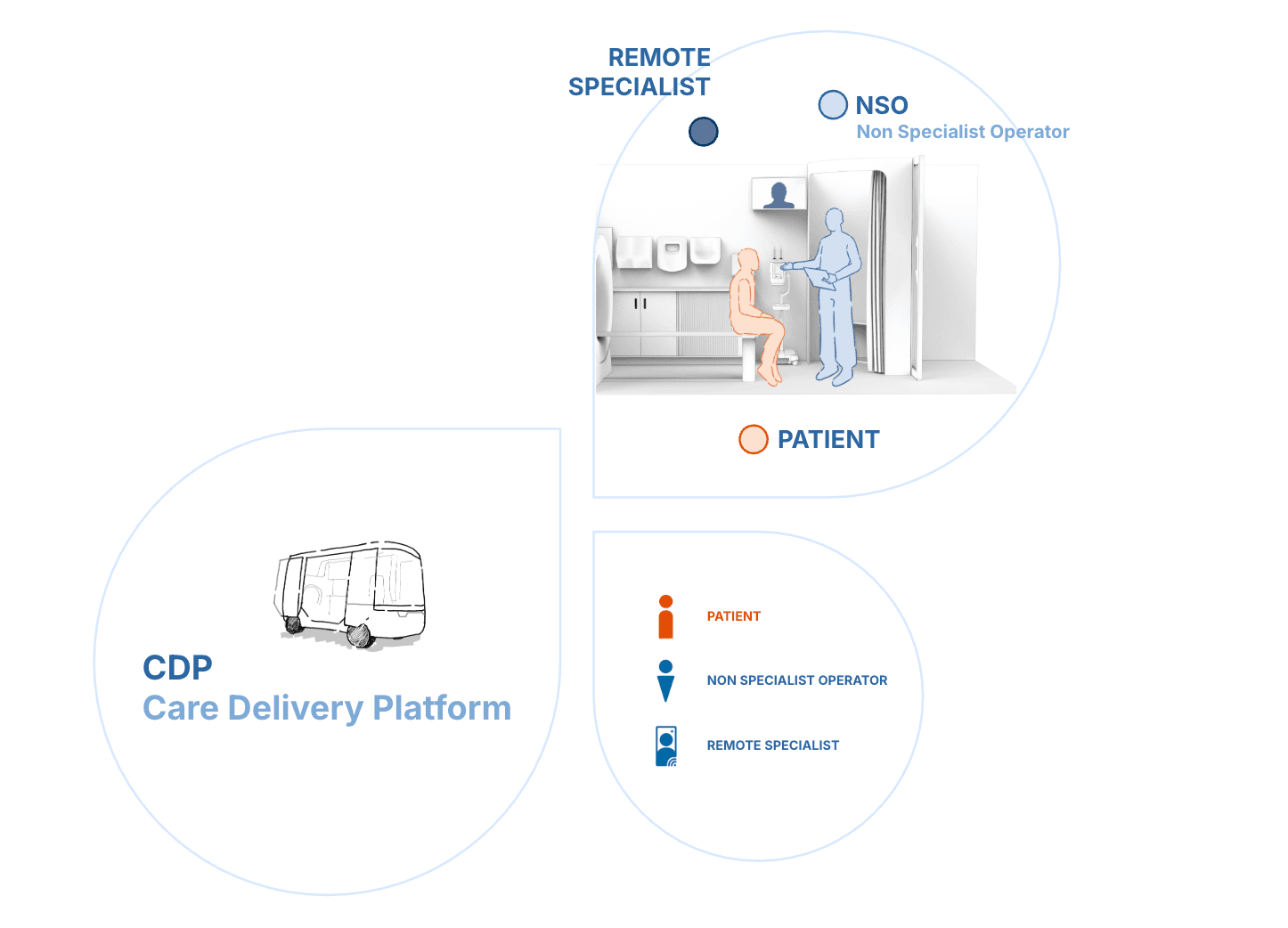
As always, I ensured that terms and user groups were clearly articulated up front, and that consistent indicators were utilised throughout the parallel artifacts.

A simple, staged workflow timeline was present on all pages to ensure the audience remained oriented throughout the workflow storytelling.
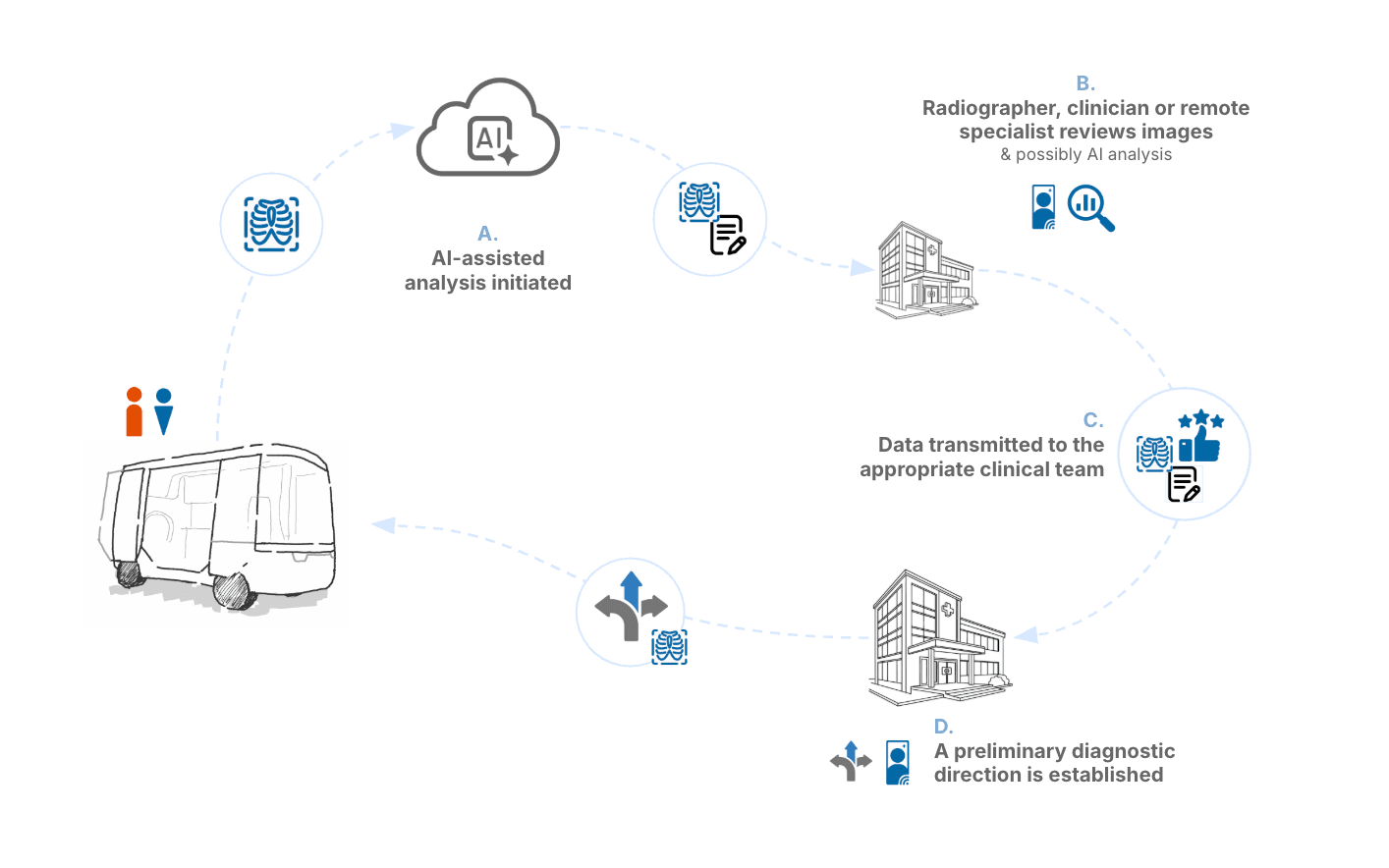
When process-steps were between different service providers (rather than two individuals in close physical proximity), simple and consistent iconography was used to demonstrate workflow, decision making points and a range of clinical pathway determination procedures.
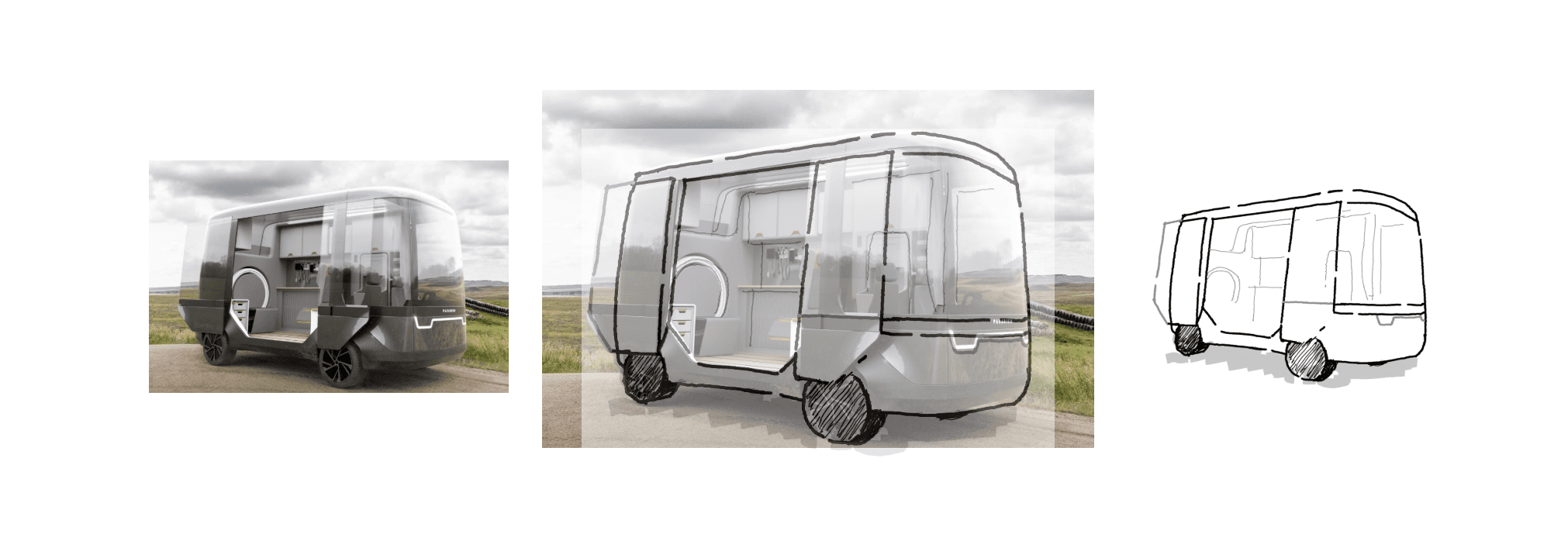
With great support from the DHC team, we were able to deliver these resources in time for the program milestone.
“PARADIGM is not a grant, it’s an award programme where performing teams have to earn their position. Georgie’s familiarity with the start-up and entrepreneur landscape meant she understood the stakes immediately and could operate at the necessary cadence. Also, as a med-tech founder herself, she grasped the regulatory, clinical, and usability nuances of the project immediately, which is really the main reason why we were able to meet the deadline. Her contributions meaningfully accelerated both the speed and the quality of our ARPA-H usability and workflow work.”
Nyein Chan Aung, PhD
Program Director- Imaging Technologies Design Research at Monash Design Health Collab.
Chief Examiner and Senior Lecturer in Design.
MONASH ART DESIGN & ARCHITECTURE

After a long break (14mos) recovering from bilateral carpal tunnel surgery, it was so enjoyable to be back on the tools with the team at Design Health Collab, and for such a unique and interesting project. I look forward to working with them again in 2026.